21 Questions to Ask Before Hiring an Interior Designer: A Homeowner's Ultimate Checklist
Hiring an interior designer? Ask these 21 essential questions on experience, budget, timelines, and execution before you sign anything.
By
Interioring Editorial TeamHiring an interior designer is one of the most foundational things that homeowners do after they buy a new home or even when they are renovating their existing home, The right designer will cater to your needs and blend in the right mix of functionality and beauty to your living space whilst also managing to keep the project within a set budget and on schedule.
However, not all interior designers work the same way.
Before signing a contract it is imperative for homeowners to evaluate and assess a designer's experience, process, communication style, and project management capabilities. Asking the right questions can help you with that and also ensure your safety from unexpected costs, delays, and disappointment later.
To help you make an informed decision, we've compiled 21 essential questions every homeowner should ask before hiring an interior designer, it is divided into 6 divisions namely Experience and Credibility, Design process and collaboration, Project management and Communication, Budget and Pricing Transparency, Timelines and Delivery, Execution and Quality Assurance, this will give us an overall understanding of the designer’s ability and help us know if they are the right person for the job.
Experience & Credibility
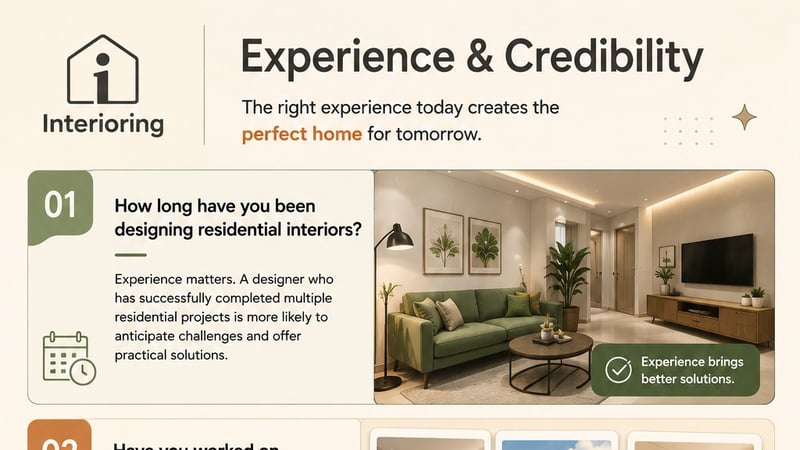
1. How long have you been designing residential interiors?
Experience matters. A designer who has successfully completed multiple residential projects is more likely to anticipate challenges and offer practical solutions.
2. Have you worked on projects similar to mine?
Whether you're designing a 2 BHK apartment, a luxury villa, or a compact urban home, it's important to know if the designer has relevant experience.
3. Can I see your portfolio?
A portfolio gives you insight into a designer's style, attention to detail, and overall design quality. Look for projects that align with your aesthetic preferences.
4. Can I speak with a past client?
This is one of the most valuable questions you can ask. Former clients can provide honest feedback about communication, timelines, workmanship, and overall satisfaction.
A designer who is confident in their work should have no problem sharing testimonials or references.
Design Process & Collaboration
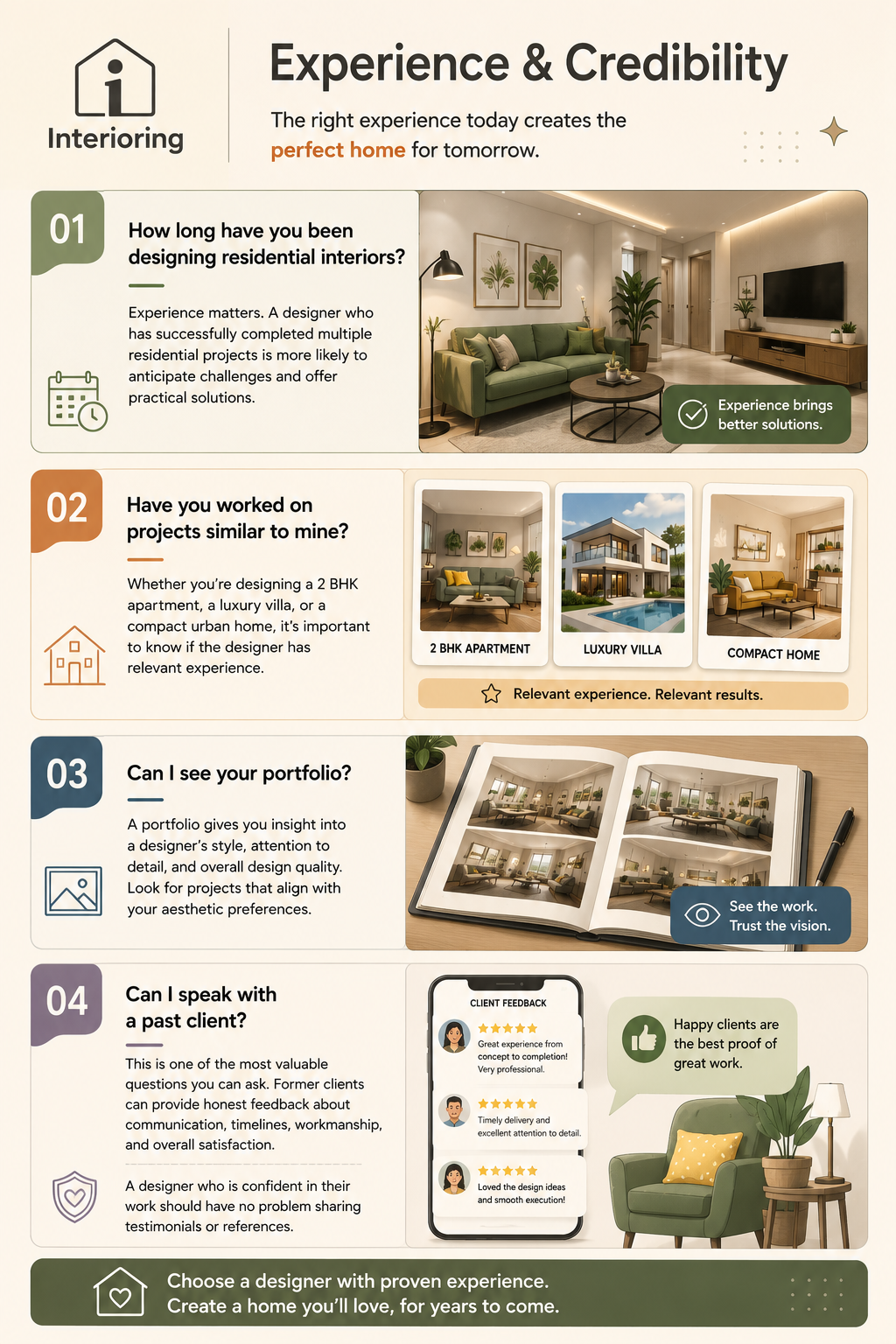
5. How does your design process work?
A professional designer will be able to explain each part of the process for the project from consultation, design development execution and handover.
A structured process often indicates a well organized team.
6. Do you provide 2D layouts and 3D visualizations?
Visual representations help homeowners understand the final design before work begins. They also reduce the chances of expensive changes during execution.
7. How much input can I have during the design process?
Your home should reflect your personality and lifestyle. Make sure the designer encourages collaboration and values your input throughout the project.
8. Can you work within my budget?
A good designer doesn't simply create beautiful spaces they create realistic solutions that align with your financial goals.
The conversation about budget should happen early, not after designs are finalized.
Project Management & Communication
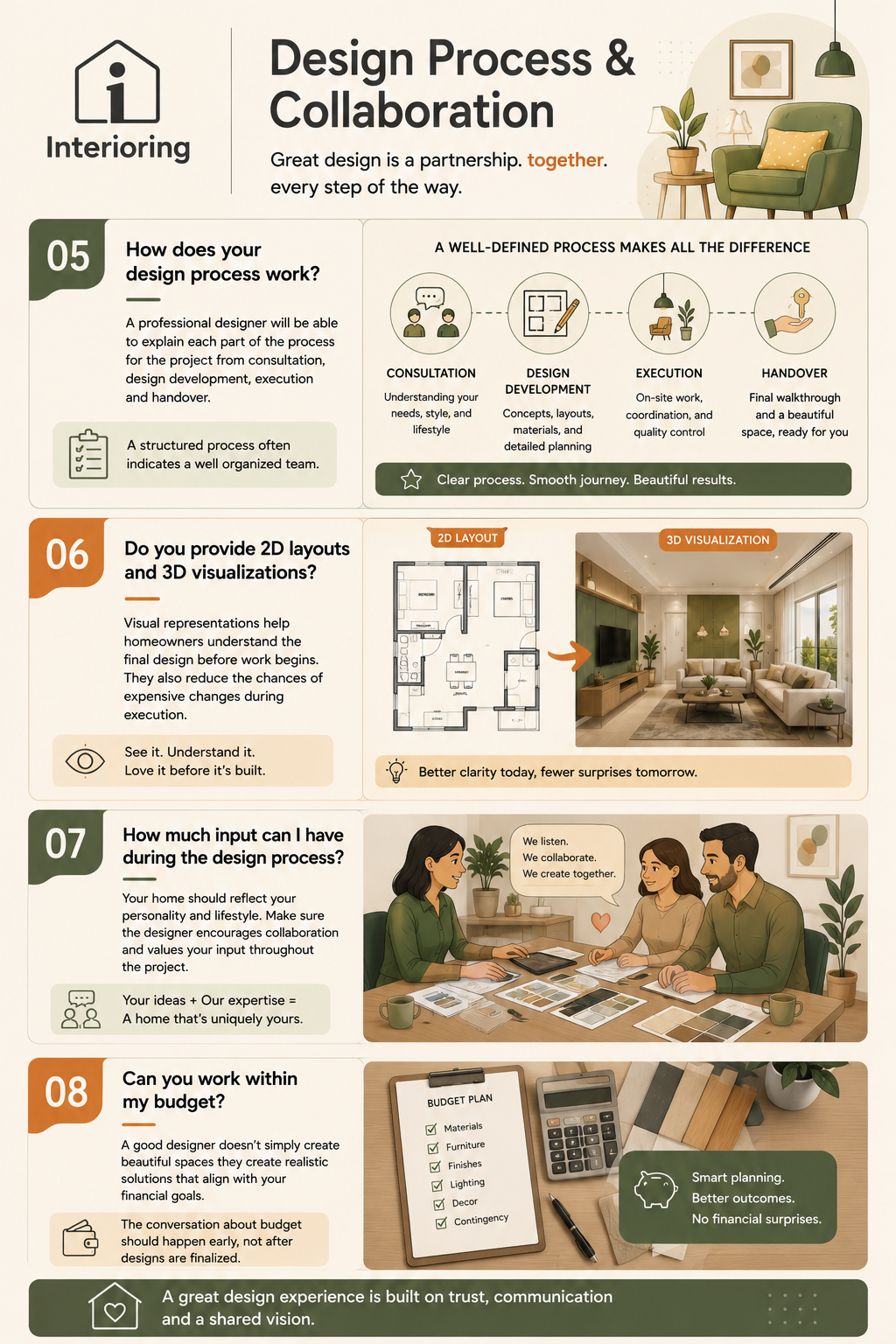
9. Who will supervise the site on a daily basis?
Many homeowners assume the designer will be present throughout the project. In reality, some firms assign project managers or site supervisors.
Clarify who will oversee execution and ensure quality standards are maintained.
10. Will you personally visit the site during execution?
Regular site visits often make a significant difference in project quality. They allow designers to identify and resolve issues before they become costly problems.
11. Who will be my primary point of contact?
Knowing exactly who to call for updates, approvals, and concerns helps avoid confusion and communication breakdowns.
12. How often will I receive project updates?
Transparent communication is essential for a smooth project experience.
Ask whether updates will be provided weekly, at major milestones, or through dedicated project management tools.
Budget & Pricing Transparency
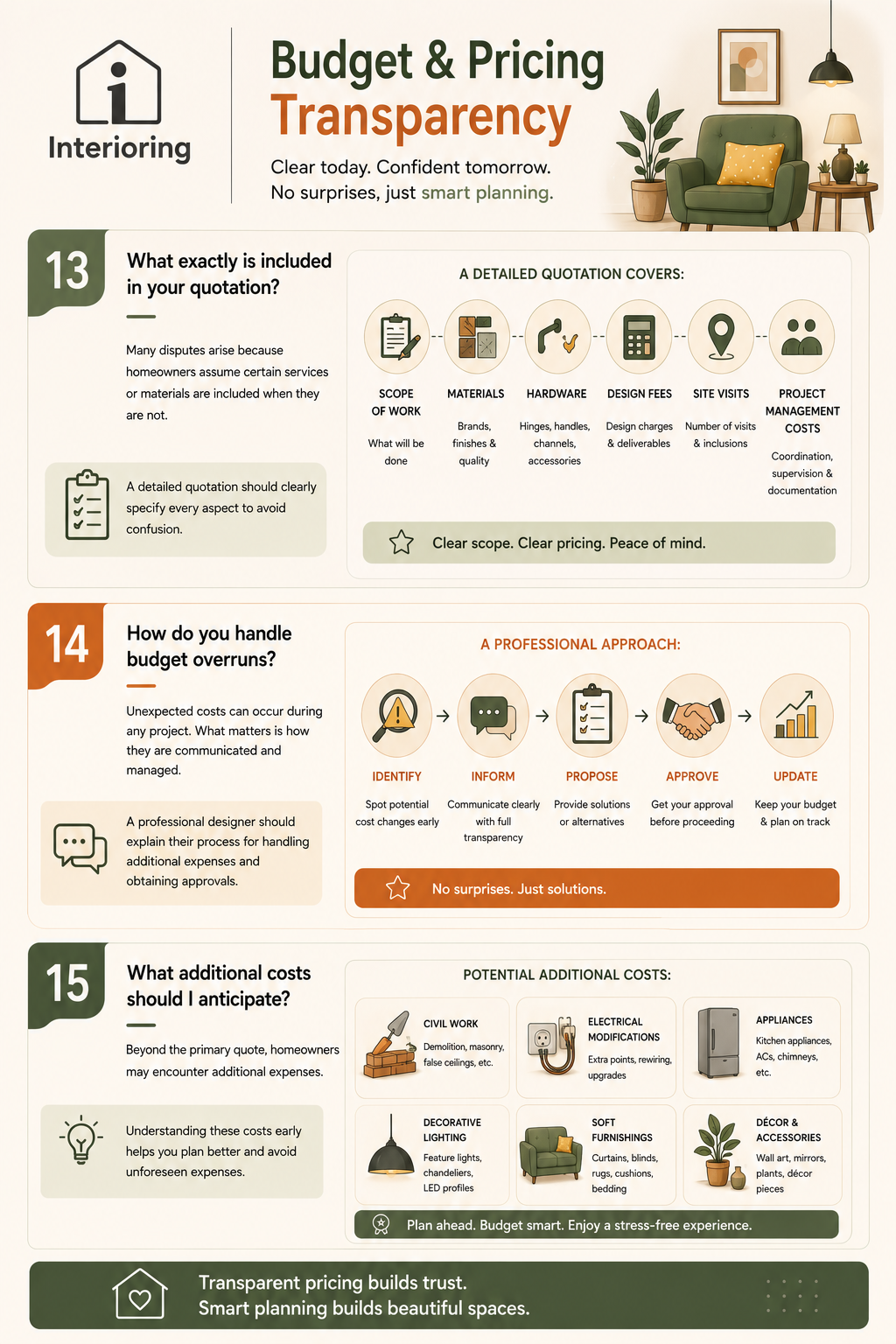
13. What exactly is included in your quotation?
Many disputes arise because homeowners assume certain services or materials are included when they are not.
A detailed quotation should clearly specify the Scope of work, Materials, Hardware, Design fees, Site visits, Project management costs so as to avoid any sort of confusion.
14. How do you handle budget overruns?
Unexpected costs can occur during any project. What matters is how they are communicated and managed, A professional designer should explain their process for handling additional expenses and obtaining approvals.
15. What additional costs should I anticipate?
Beyond the primary quote, homeowners may encounter expenses related to Civil work, Electrical modifications, Appliances, Decorative lighting, Soft furnishings, understanding these costs early helps one to avoid any sort of unforeseen expenses.
Timelines & Delivery
16. What is the estimated project timeline?
While every project is different, an experienced designer should be able to provide a realistic timeline based on project scope and complexity, one must be cautious of promises that sound too good to be true.
17. What happens if timelines slip?
Delays can occur due to material shortages, weather conditions, design revisions, or vendor issues, the important question is not whether delays happen, but how the designer manages them, a trustworthy designer will communicate delays promptly and provide revised schedules when necessary.
18. What are the most common causes of delays in your projects?
This question reveals both experience and transparency, designers who openly discuss potential challenges often have stronger project management systems in place and have the experience to deal with problems, and this also gives us an idea of what could cause a delay if it does happen.
Execution & Quality Assurance
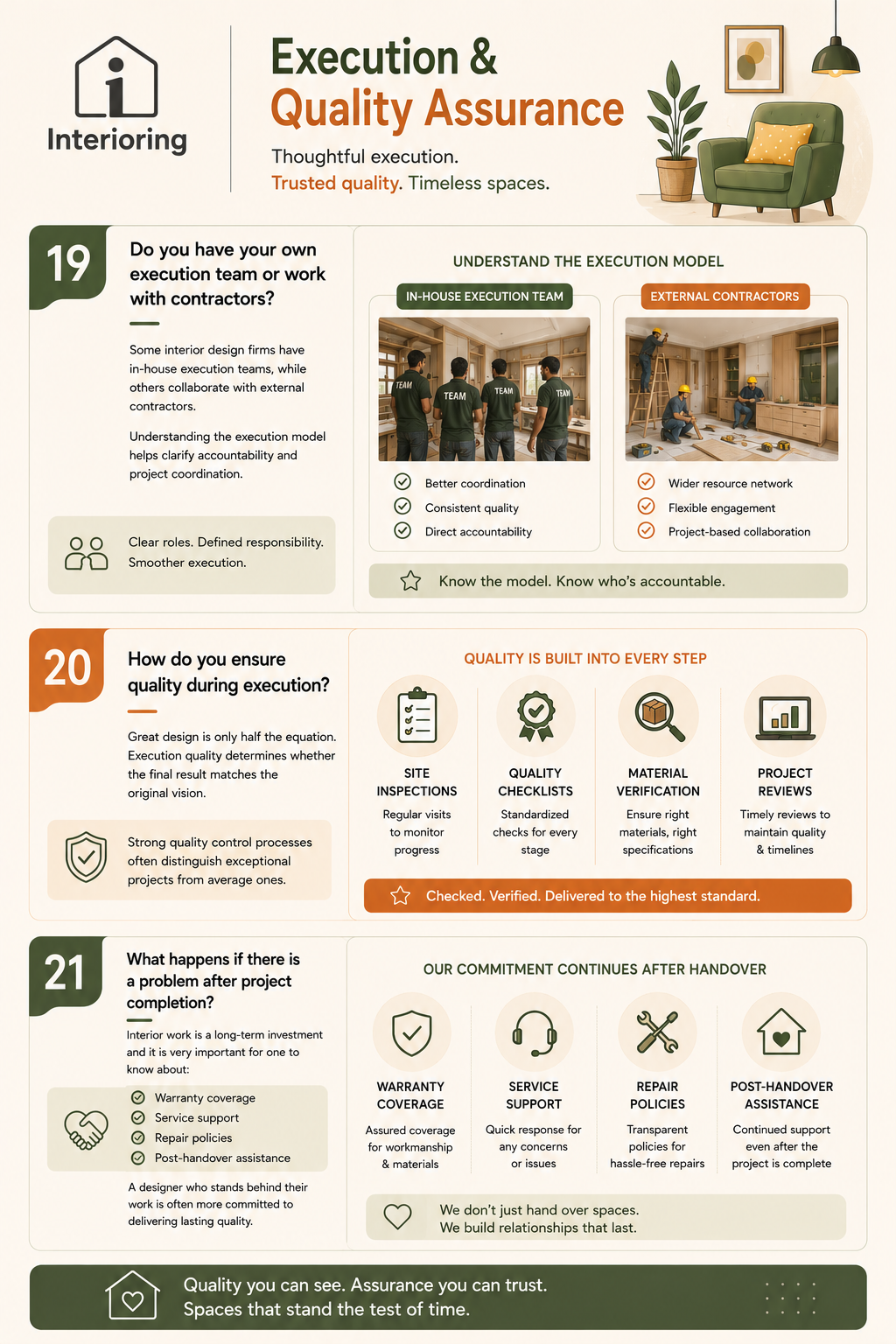
19. Do you have your own execution team or work with contractors?
Some interior design firms have in-house execution teams, while others collaborate with external contractors.
Understanding the execution model helps clarify accountability and project coordination.
20. How do you ensure quality during execution?
Great design is only half the equation. Execution quality determines whether the final result matches the original vision, one should ask about Site inspections, Quality checklists, Material verification, Project reviews.
Strong quality control processes often distinguish exceptional projects from average ones.
21. What happens if there is a problem after project completion?
Interior work is a long-term investment and it is very important for one to know about Warranty coverage, Service support, Repair policies, Post-handover assistance.
A designer who stands behind their work is often more committed to delivering lasting quality.
Red Flags to Watch Out For
Asking the right questions is important, but knowing what answers to avoid is equally valuable.
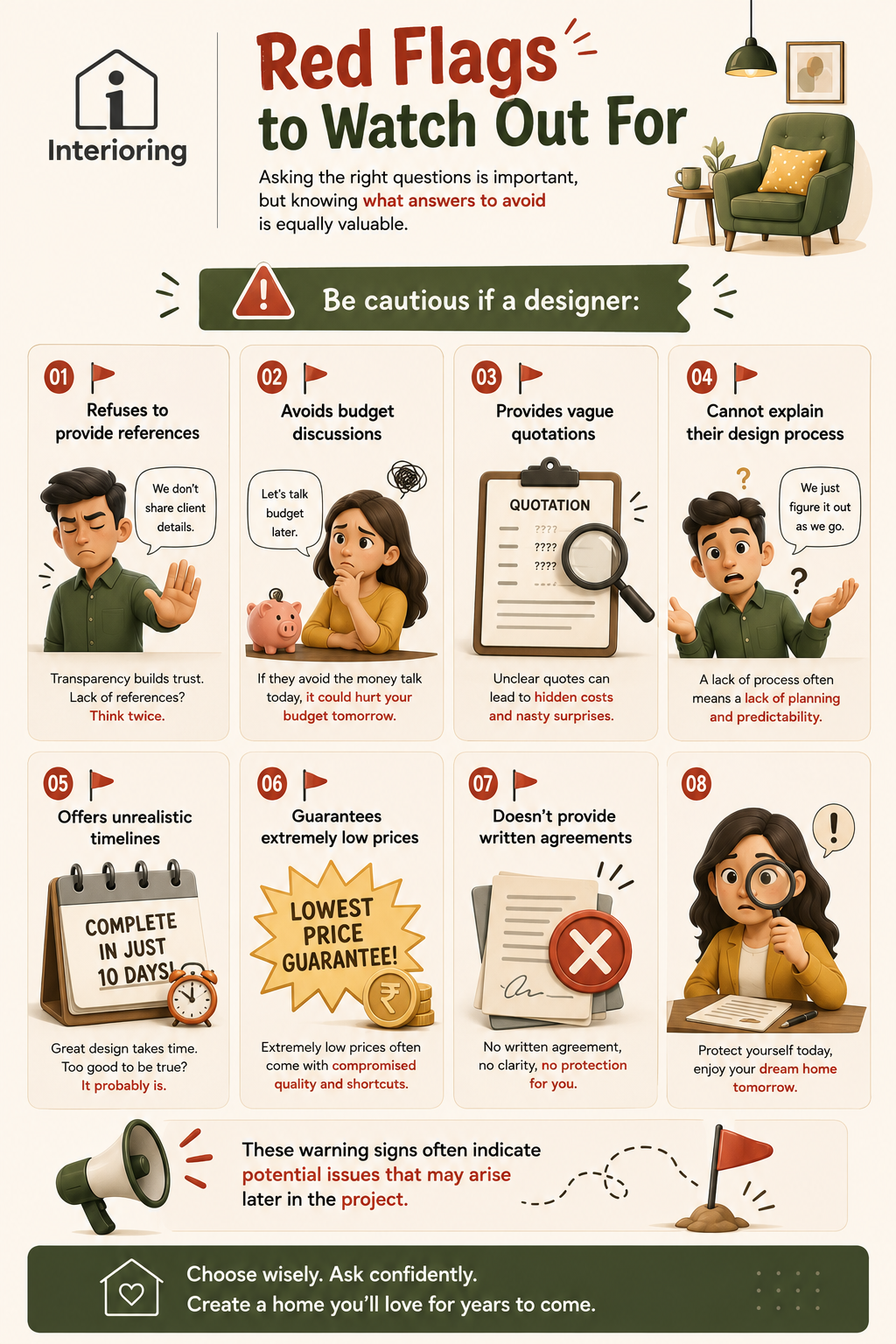
Be cautious if a designer:
Refuses to provide references
Avoids budget discussions
Provides vague quotations
Cannot explain their design process
Offers unrealistic timelines
Guarantees extremely low prices
Doesn't provide written agreements
These warning signs often indicate potential issues that may arise later in the project.
Hiring an interior designer is about much more than choosing someone with an attractive portfolio. You're selecting a professional who will be guiding one of the biggest investments for your home and by asking these 21 questions before making a decision, you'll gain a clearer understanding of a designer's experience, process, communication style, and commitment to quality.
Looking for Interior Design Help?
Connect with top-rated interior professionals in your city. Browse portfolios, compare styles, and get free quotes.