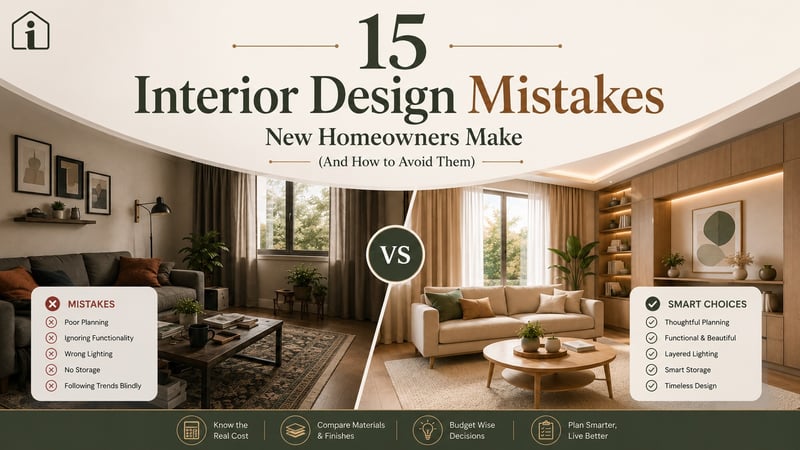
15 Interior Design Mistakes New Homeowners Make (And How to Avoid Them)
Poor storage, bad lighting, no electrical planning — here are 15 interior design mistakes new homeowners make and exactly how to avoid every one of them.
By
Interioring Editorial TeamMoving into a new home is one of the most exciting things new homeowners feel, after finding the perfect property then doing endless amounts of paperwork finally homeowners come to the most fun aspect, designing their interiors, The scour the internet Pinterest boards filled with aesthetic ideas, Instagram exploration has added a 100 more ideas to those visuals and interior design videos online make every home look stunning.
Most homeowners spend their time to make their house look incredibly aesthetically appealing so much so that they forget to make it practical, and this results in a house that photographs beautifully but becomes a mess to live in, and cracks slowly start to become visible:
Not enough storage.
Poor lighting.
Missing plug points.
Expensive materials that are difficult to maintain.
Layouts that don't suit everyday life.
The good news is that most of these mistakes are completely avoidable.
Here are the 15 most common interior design mistakes new homeowners make and how you can avoid them.
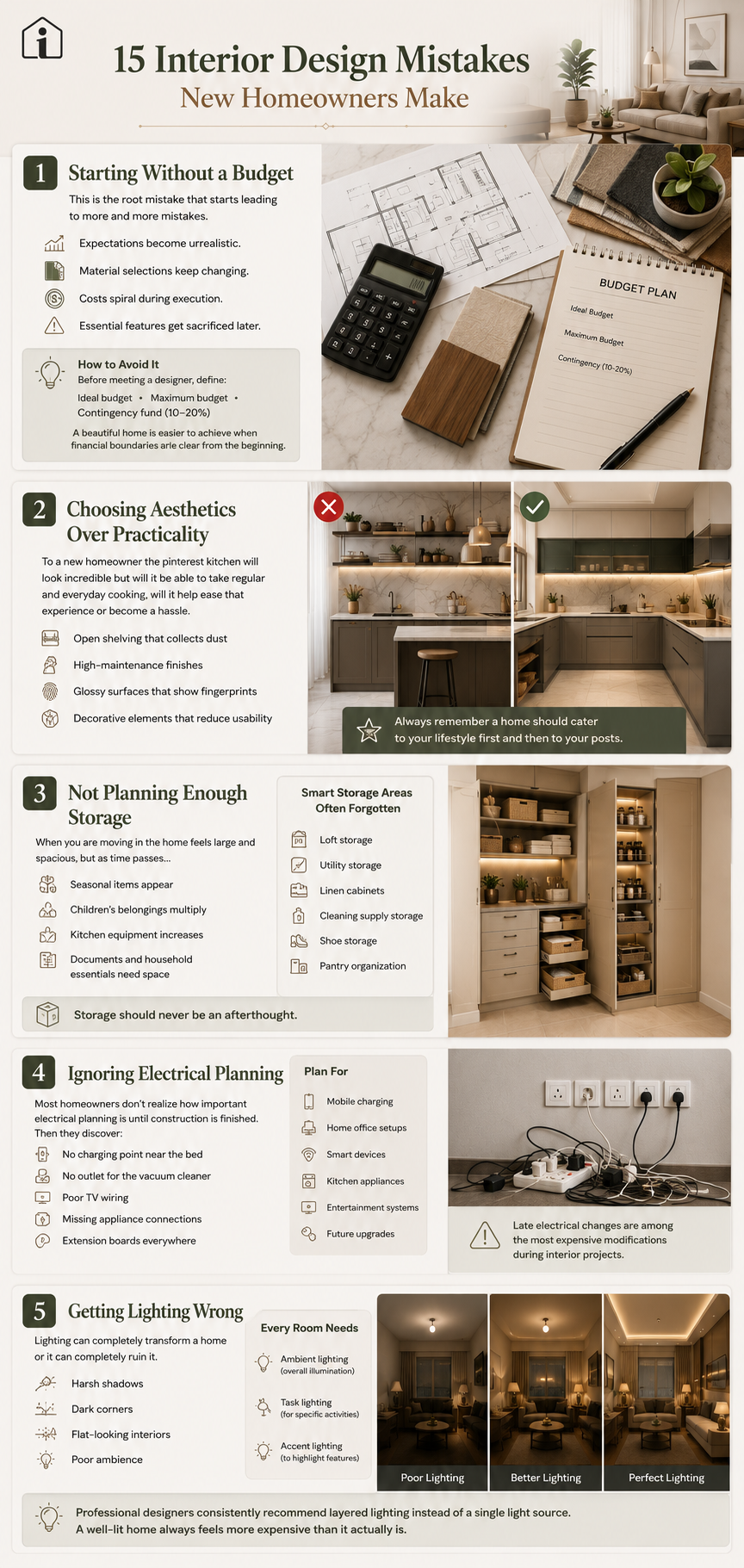
1. Starting Without a Budget
This is the root mistake that starts leading to more and more mistakes, homeowners start looking at designs before finalizing a realistic budget and this results in:
Expectations become unrealistic.
Material selections keep changing.
Costs spiral during execution.
Essential features get sacrificed later.
Industry experts consistently identify poor budget planning as one of the leading causes of project stress and cost overruns.
How to Avoid It
Before meeting a designer, define:
Ideal budget
Maximum budget
Contingency fund (10–20%)
A beautiful home is easier to achieve when financial boundaries are clear from the beginning.
2. Choosing Aesthetics Over Practicality
To a new homeowner the pintrest kitchen will look incredible but will it be able to take regular and everyday cooking, will it help ease that experience or become a hassle, homeowners tend to go for high aesthetically pleasing options over functional ones and then later start regretting things such as:
Open shelving that collects dust
High-maintenance finishes
Glossy surfaces that show fingerprints
Decorative elements that reduce usability
Always remember a home should cater to your lifestyle first and then to your posts.
3. Not Planning Enough Storage
Another major mistake homeowners make is not planning for space, when you are moving in the home feels large and spacious, but as time passes Seasonal items appear, Children's belongings multiply, Kitchen equipment increases, Documents and household essentials need space.
Without proper storage planning, clutter quickly takes over even the most beautiful interiors.
Smart Storage Areas Often Forgotten
Loft storage
Utility storage
Linen cabinets
Cleaning supply storage
Shoe storage
Pantry organization
Storage should never be an afterthought.
4. Ignoring Electrical Planning
Most homeowners don't realize how important electrical planning is until construction is finished.
Then they discover:
No charging point near the bed
No outlet for the vacuum cleaner
Poor TV wiring
Missing appliance connections
Extension boards everywhere
Late electrical changes are among the most expensive modifications during interior projects.
Plan For
Mobile charging
Home office setups
Smart devices
Kitchen appliances
Entertainment systems
Future upgrades
5. Getting Lighting Wrong
Lighting can completely transform a home or it can completely ruin it,many homeowners rely on ceiling lights entirely and then it results in
Harsh shadows
Dark corners
Flat-looking interiors
Poor ambience
Professional designers consistently recommend layered lighting instead of a single light source.
Every Room Needs
Ambient lighting
Task lighting
Accent lighting
A well-lit home always feels more expensive than it actually is.
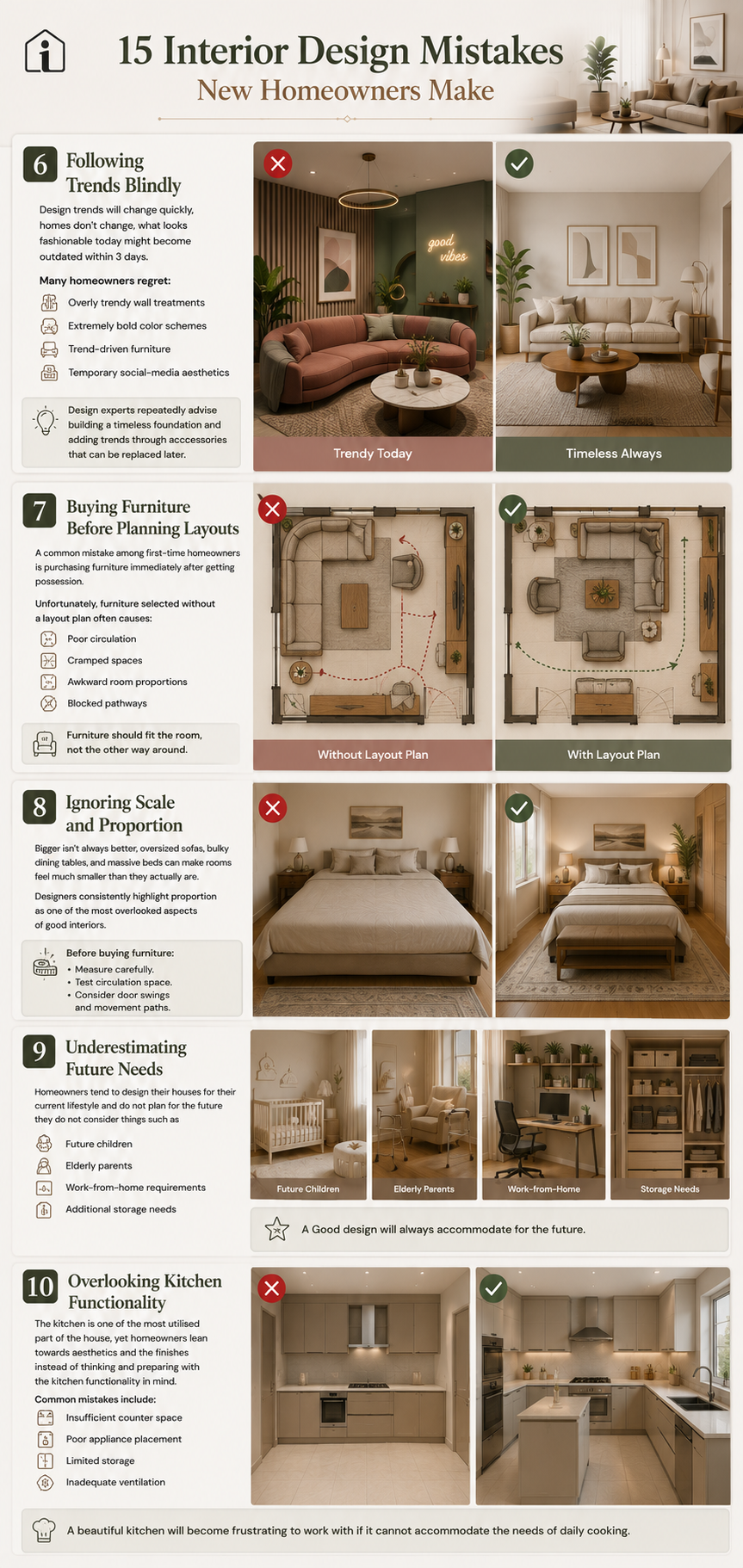
6. Following Trends Blindly
Design trends will change quickly, homes don’t change, what looks fashionable today might become outdated within 3 days.
Many homeowners regret:
Overly trendy wall treatments
Extremely bold color schemes
Trend-driven furniture
Temporary social-media aesthetics
Design experts repeatedly advise building a timeless foundation and adding trends through accessories that can be replaced later.
7. Buying Furniture Before Planning Layouts
A common mistake among first-time homeowners is purchasing furniture immediately after getting possession.
Unfortunately, furniture selected without a layout plan often causes:
Poor circulation
Cramped spaces
Awkward room proportions
Blocked pathways
Furniture should fit the room, not the other way around.
8. Ignoring Scale and Proportion
Bigger isn't always better, oversized sofas, bulky dining tables, and massive beds can make rooms feel much smaller than they actually are. Designers consistently highlight proportion as one of the most overlooked aspects of good interiors.
Before buying furniture:
Measure carefully.
Test circulation space.
Consider door swings and movement paths.
9. Underestimating Future Needs
Homeowners tend to design their houses for their current lifestyle and do not plan for the future they do not consider things such as
Future children
Elderly parents
Work-from-home requirements
Additional storage needs
A Good design will always accommodate for the future.
10. Overlooking Kitchen Functionality
The kitchen is one of the most utilised part of the house, yet homeowners lean towards aesthetics and the finishes instead of thinking and preparing with the kitchen functionality in mind.
Common mistakes include:
Insufficient counter space
Poor appliance placement
Limited storage
Inadequate ventilation
A beautiful kitchen will become frustrating to work with if it cannot accommodate the needs of daily cooking.
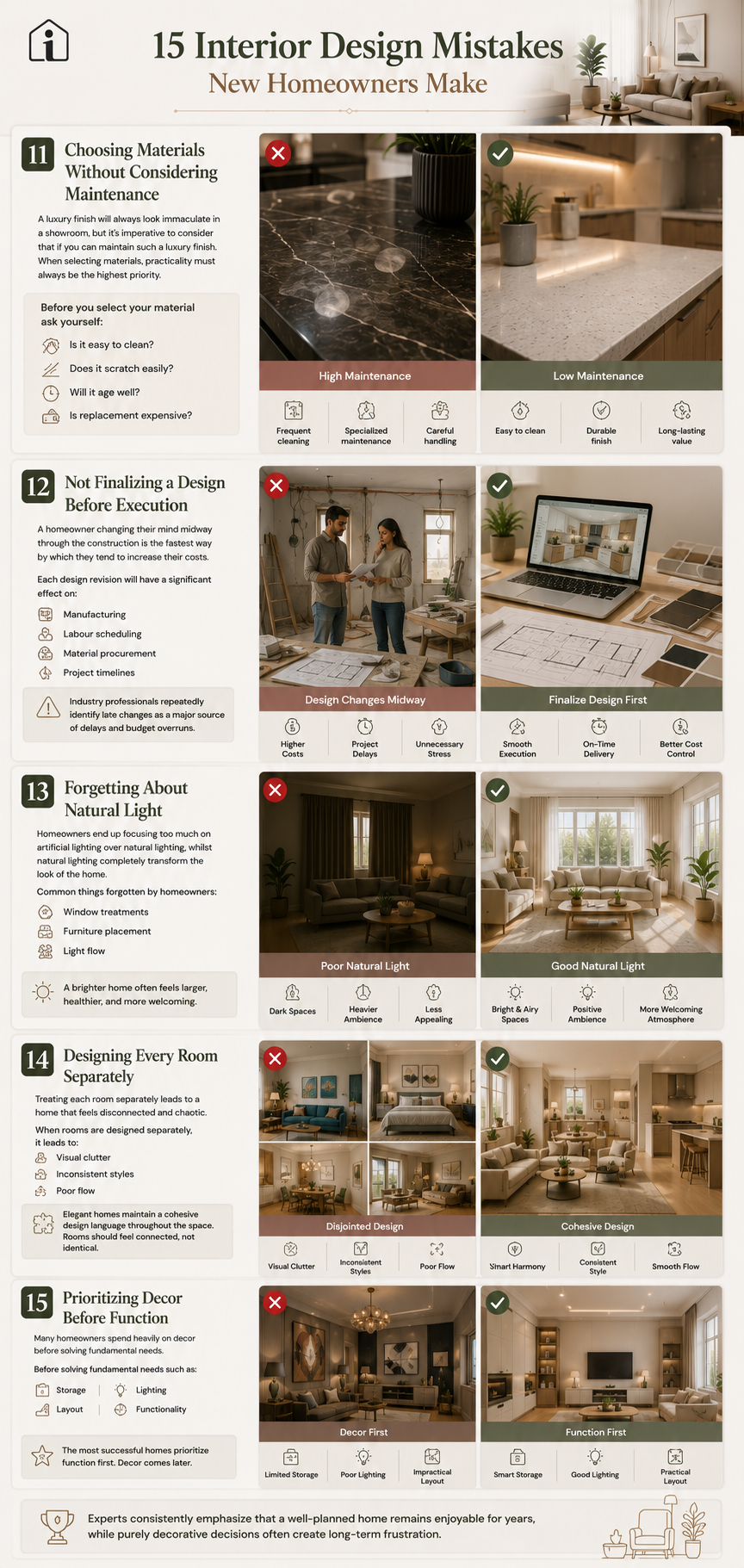
11. Choosing Materials Without Considering Maintenance
A Luxury finish will always look immaculate in a showroom, but it's imperative to consider that if you can maintain such a luxury finish, some materials will require Frequent cleaning, Specialized maintenance and Careful handling, when selecting materials practicality of that material must always be given the highest priority.
Before you select your material ask yourself the following question and then choose your material wisely.
Is it easy to clean?
Does it scratch easily?
Will it age well?
Is replacement expensive?
12. Not Finalizing a Design Before Execution
A Homeowner changing their mind midway through the construction is the fastest way by which they tend to increase their costs, each design revision will have a significant effect on
Manufacturing
Labor scheduling
Material procurement
Project timelines
Industry professionals repeatedly identify late changes as a major source of delays and budget overruns.
13. Forgetting About Natural Light
Homeowners end up focusing too much on Artificial lighting over Natural Lighting, Whilst artificial lighting helps natural lighting completely transform the look of the home. Below are some of the common things forgotten by homeowners.
Window treatments
Furniture placement
Light flow
A brighter home often feels larger, healthier, and more welcoming.
14. Designing Every Room Separately
One more major mistake that homeowners make is treating each and every room separately, and designing each one separately, the most elegant homes maintain a cohesive design language throughout the space, this doesn’t mean that every room must look Identical but they should feel connected to each other.
When rooms are designed separately it leads to Visual clutter, Inconsistent styles and Poor flow.
15. Prioritizing Decor Before Function
Many homeowners spend heavily on:
Decorative lights
Artwork
Accent walls
Statement furniture
Before solving fundamental needs such as:
Storage
Lighting
Layout
Functionality
The most successful homes prioritize function first.
Decor comes later.
Experts consistently emphasize that a well-planned home remains enjoyable for years, while purely decorative decisions often create long-term frustration.
Most interior design regrets aren't caused by bad designers.They're caused by poor planning.
If you're designing your first home, focus on these five priorities before anything else:
Establish a realistic budget.
Plan storage thoroughly.
Finalize your electrical layout.
Create a layered lighting plan.
Prioritize functionality before aesthetics.
Beautiful interiors attract attention.
Well-planned interiors improve your life every single day.
The homeowners who are happiest years after moving in aren't necessarily the ones who spent the most money they're the ones who avoided the mistakes that make a home difficult to live in.
Before choosing colors, laminates, or furniture, spend time planning how your family will actually use the space.
That's the difference between a house that looks good and a home that works beautifully.
Looking for Interior Design Help?
Connect with top-rated interior professionals in your city. Browse portfolios, compare styles, and get free quotes.