Why Interior Projects Go Over Budget (And How to Prevent It)
Worried about budget overruns? Learn the 6 reasons interior projects exceed budgets — scope creep, hidden costs, change requests — and how to prevent them.
By
Interioring Editorial TeamOne of the biggest concerns that homeowners tend to have before starting an Interior Design project is “Will I spend more than I originally planned for?”.
Budgets overruns are one of the most common challenges when it comes to home interiors. A project that starts with a budget of ₹8 lakh can quickly become a ₹10 lakh or ₹12 lakh project if it is not properly managed and the costs are not regulated properly.
Yet, it doesn't have to be this way, most budget overruns are preventable, by understanding the common reasons by which interior projects exceed their budgets, homeowners can make better decisions, avoid costly surprises, and ensure that their dream home doesn't become a financial headache.
In this guide, we'll explore the most common causes of budget overruns and share practical strategies to keep your interior project on track.
Why Do Interior Projects Go Over Budget?
Most homeowners assume budget overruns happen because contractors or designers underestimate costs, whilst poor planning can certainly contribute, the reality is often more complicated than that.
Some of the major reasons due to which Interior projects usually exceed budget are those of: Scope creep, Material upgrades, Hidden costs, Change requests during execution, Lack of detailed planning.
Let's explore each of these reasons in much more detail and understand them so that you can prevent them from occurring in your next Interior Designing project.
1. Scope Creep: The Silent Budget Killer
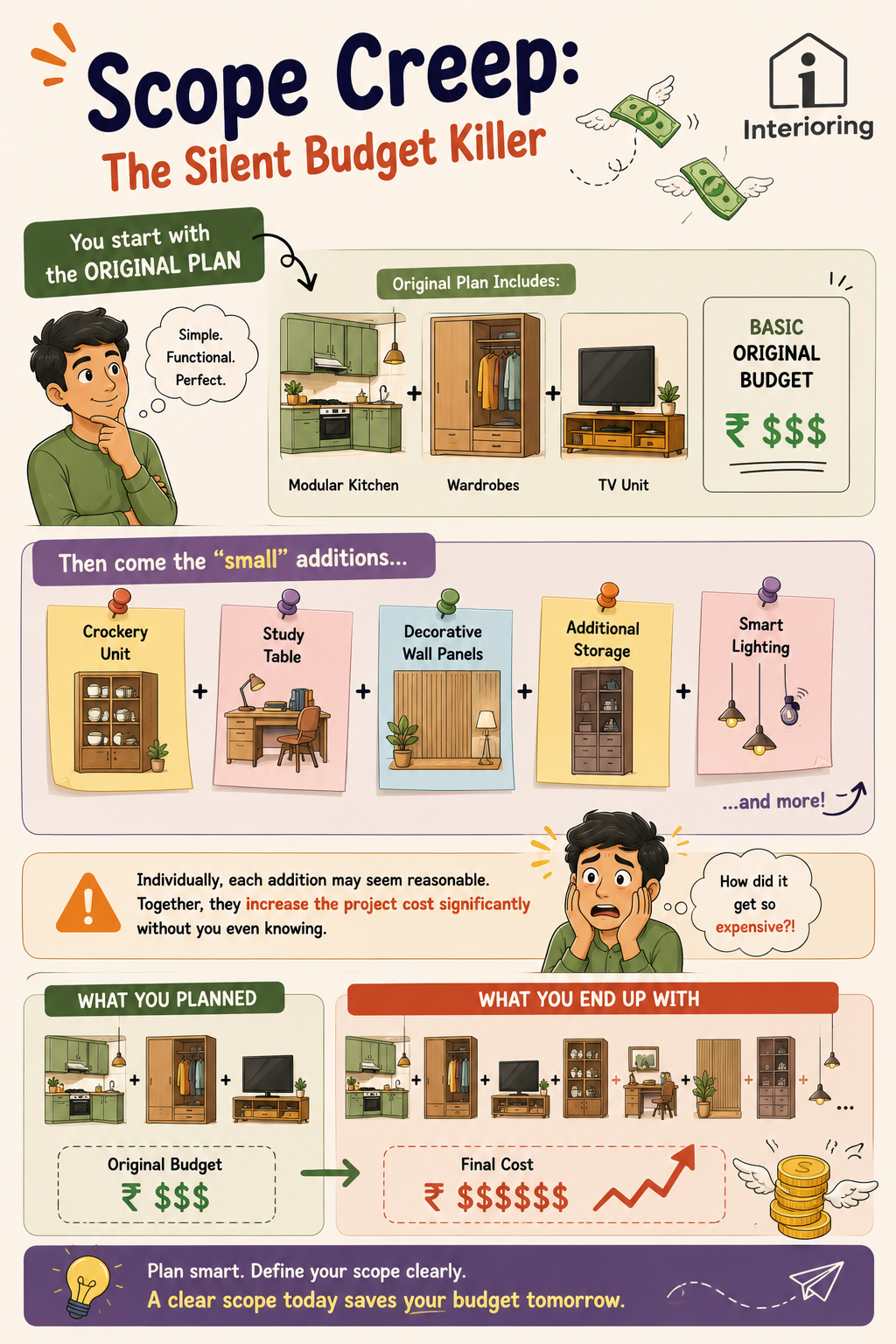
A Scope creep is the uncontrolled, continuous expansion of a project's requirements or deliverables beyond its original plan. Scope creeps often start off with seemingly harmless additions.
For example:
You start your project out with the original plan consisting of Modular kitchen, Wardrobes and a TV unit which gives you a basic original budget but then you slowly add in Crockery unit, Study table, Decorative wall panels, Additional storage, Smart lighting etc. Individually, each addition may seem reasonable. Together, they increase the project cost significantly without you even knowing.
Why It Happens
As homeowners begin visualizing their future home, they often discover new ideas on Instagram, Pinterest, YouTube, or design websites and all of sudden, features that weren't originally planned become "must-haves" and slowly affect the overall budget of the project.
How to Prevent It
Before work begins, ensure to create a complete wish list, then follow it up by Separating "essential" and "optional" items, finalize the scope in writing and then as a fail safe establish a contingency budget for upgrades. Remember the more decisions made before execution starts, the easier it becomes to control spending.
2. Material Upgrades Add Up Quickly
Many homeowners begin with a realistic budget but later choose premium materials without fully understanding the cost impact.
We can understand this better with an example of a Kitchen
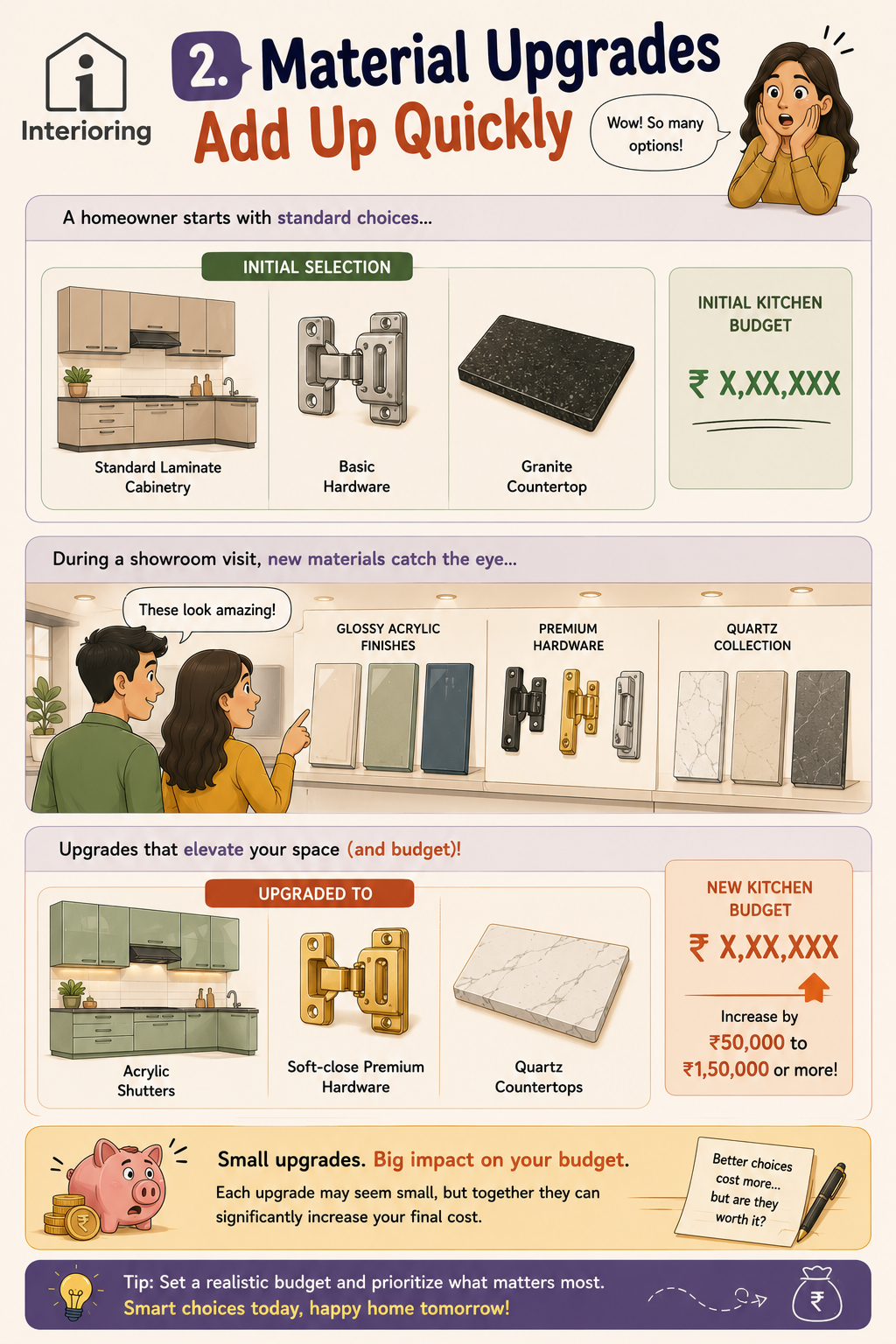
A homeowner initially selects Standard laminate cabinetry, Basic hardware and a Granite countertop and then during a showroom visit seeing newer materials they upgrade it to Acrylic shutters, Soft-close premium hardware and Quartz countertops and now all of a sudden the kitchen budget increases by ₹50,000 to ₹1,50,000 or more.
How to Prevent It
Before you finalize anything, ask your designer for Material samples and their Cost Comparisons ,understanding the financial impact before making decisions helps maintain budget control. It is imperative to remember that premium materials improve aesthetics and durability, but they should align with your overall financial plan.
3. Hidden Costs Most Homeowners Forget
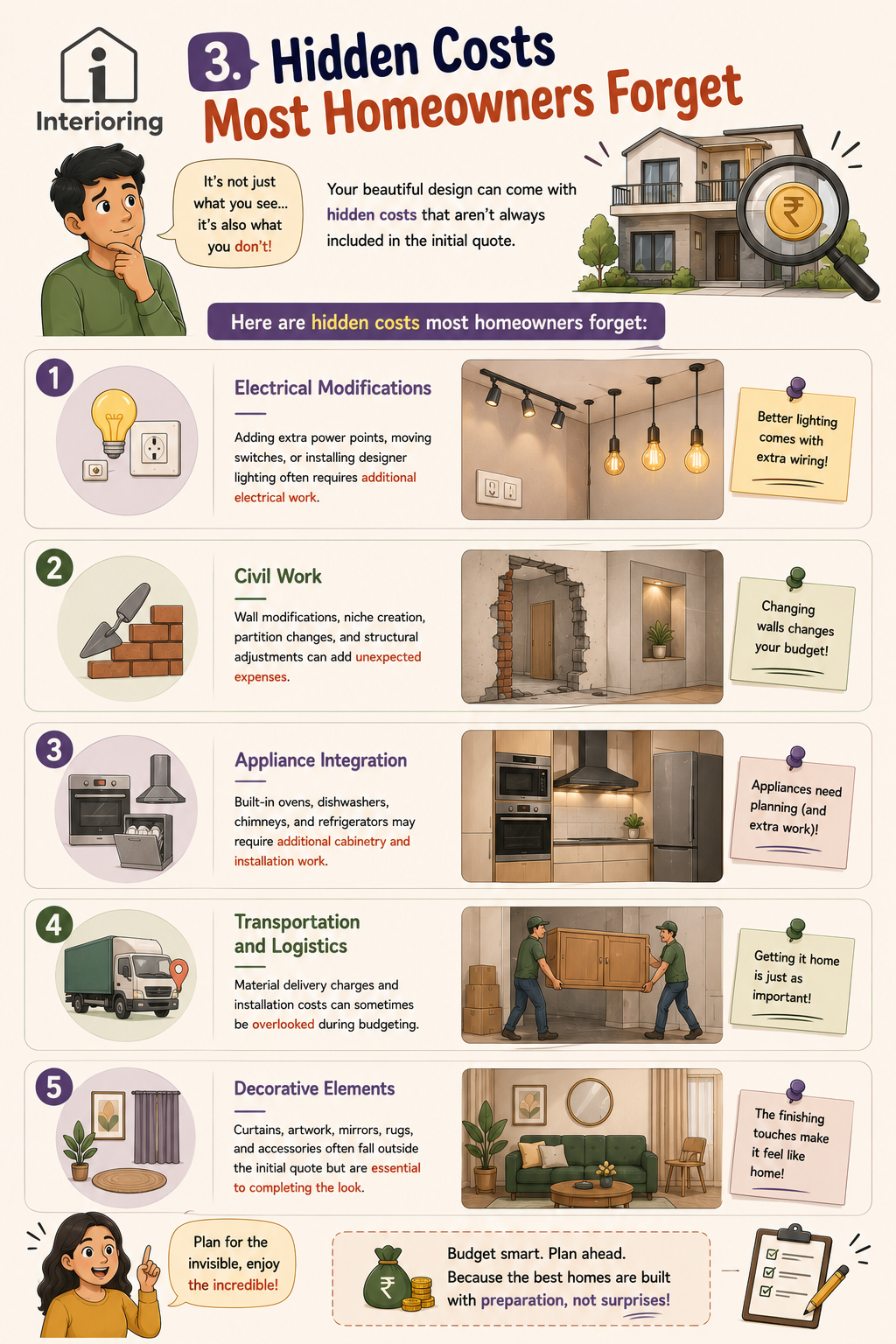
Another one of the biggest reasons interior budgets spiral out of control is because homeowners focus on those items which are visible to them or massive centerpieces and they budget for these things like Wardrobes, Kitchen, Furniture, Decorative units and tend to forget about associated costs.
Some of these expenses are -
Electrical Modifications
Adding extra power points, moving switches, or installing designer lighting often requires additional electrical work.
Civil Work
Wall modifications, niche creation, partition changes, and structural adjustments can add unexpected expenses.
Appliance Integration
Built-in ovens, dishwashers, chimneys, and refrigerators may require additional cabinetry and installation work.
Transportation and Logistics
Material delivery charges and installation costs can sometimes be overlooked during budgeting.
Decorative Elements
Curtains, artwork, mirrors, rugs, and accessories often fall outside the initial quote but are essential to completing the look.
How to Prevent It
Always request a detailed estimate from your designer that clearly outlines What's included, What's excluded, Potential additional costs, transparency during the planning stage reduces the chances of any surprises later.
4. Change Requests During Execution
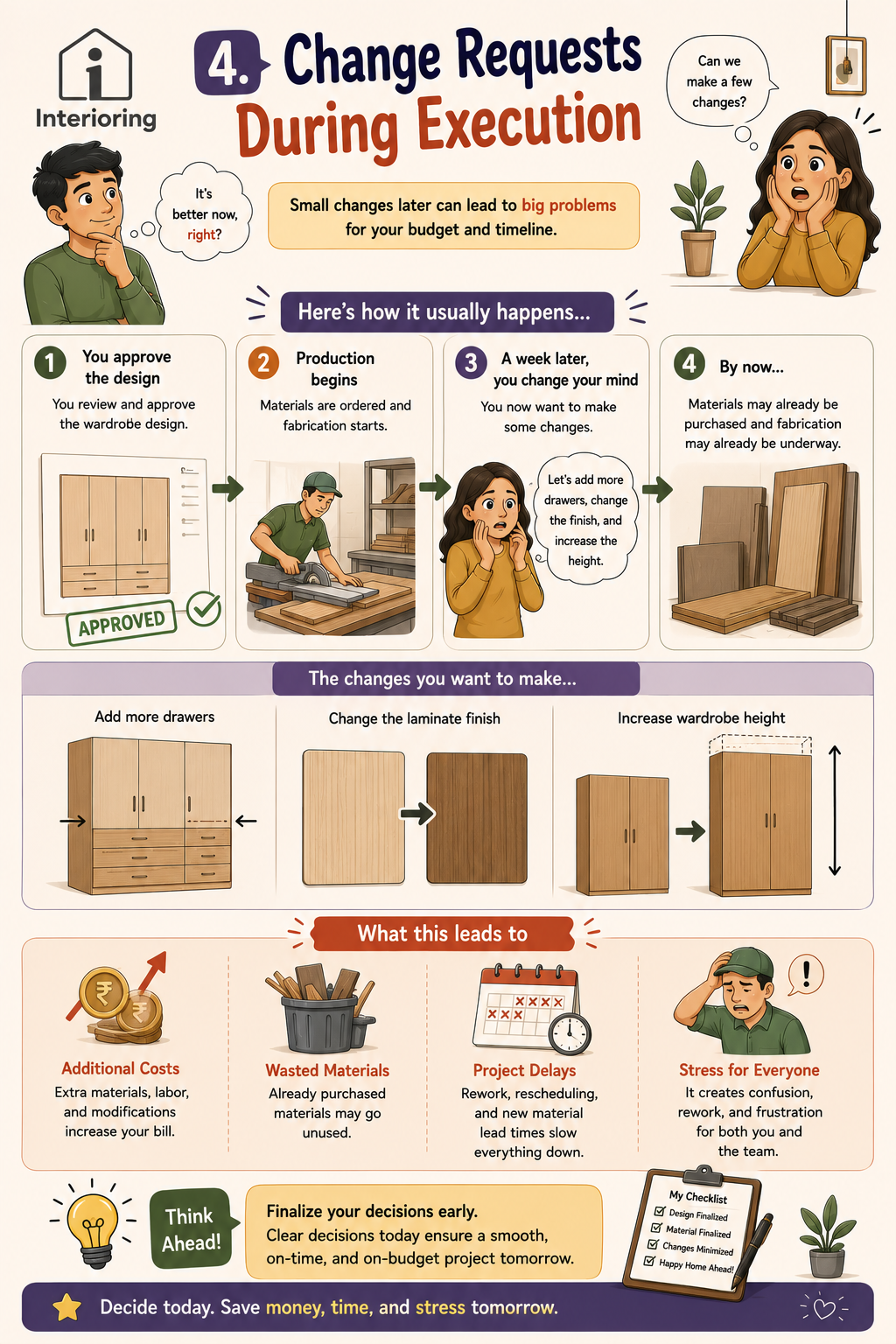
This is perhaps the most expensive mistake homeowners make, a change request occurs when modifications are made after production or installation has already begun.
An easy example we can use to understand this is you approve a wardrobe design and the production starts but a week later, you decide to add more drawers, change the laminate finish, increase wardrobe height and by this point materials may already be purchased and fabrication may already be underway, which results in additional costs, wasted materials, and project delays.
Why It Happens
Many homeowners make decisions too quickly or approve designs without fully reviewing them but once they see the project taking shape, they begin noticing things they'd like to change.
How to Prevent It
Before approving any design:
Review all drawings carefully.
Verify dimensions.
Confirm materials.
Discuss storage requirements thoroughly.
Taking extra time during planning can save both money and frustration during execution.
5. Unrealistic Initial Budgets
Many homeowners underestimate the true cost of interiors.
A common example:
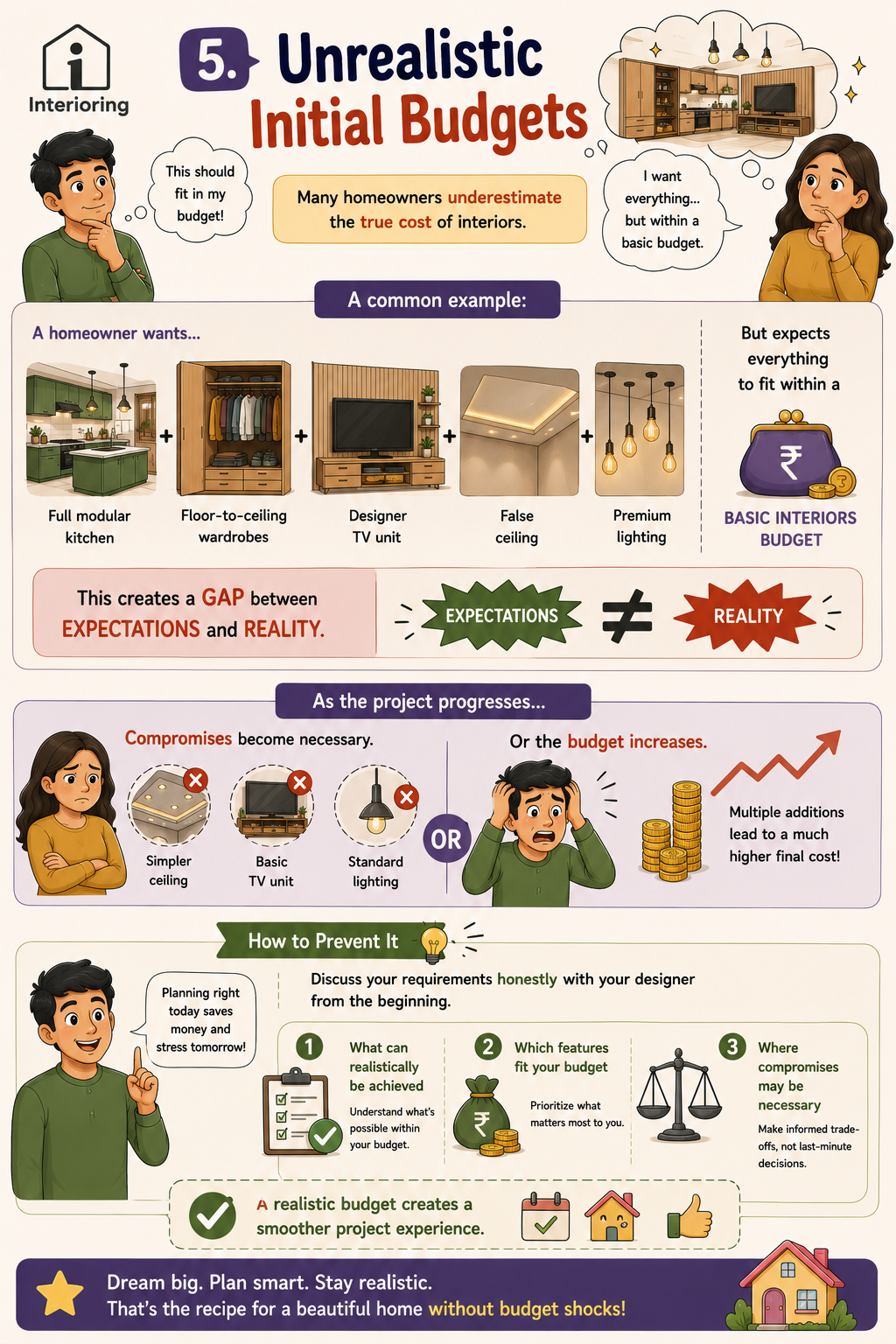
A homeowner wants a full modular kitchen, floor-to-ceiling wardrobes, designer TV unit, false ceiling, premium lighting but then expects everything to fit within a budget designed for basic interiors this creates a gap between expectations and reality
As the project progresses, compromises become necessary or the budget increases.
How to Prevent It
Discuss your requirements honestly with your designer from the beginning.
A professional designer should explain What can realistically be achieved, Which features fit your budget, Where compromises may be necessary one must remember that a realistic budget creates a smoother project experience.
6. Poor Planning Before Execution
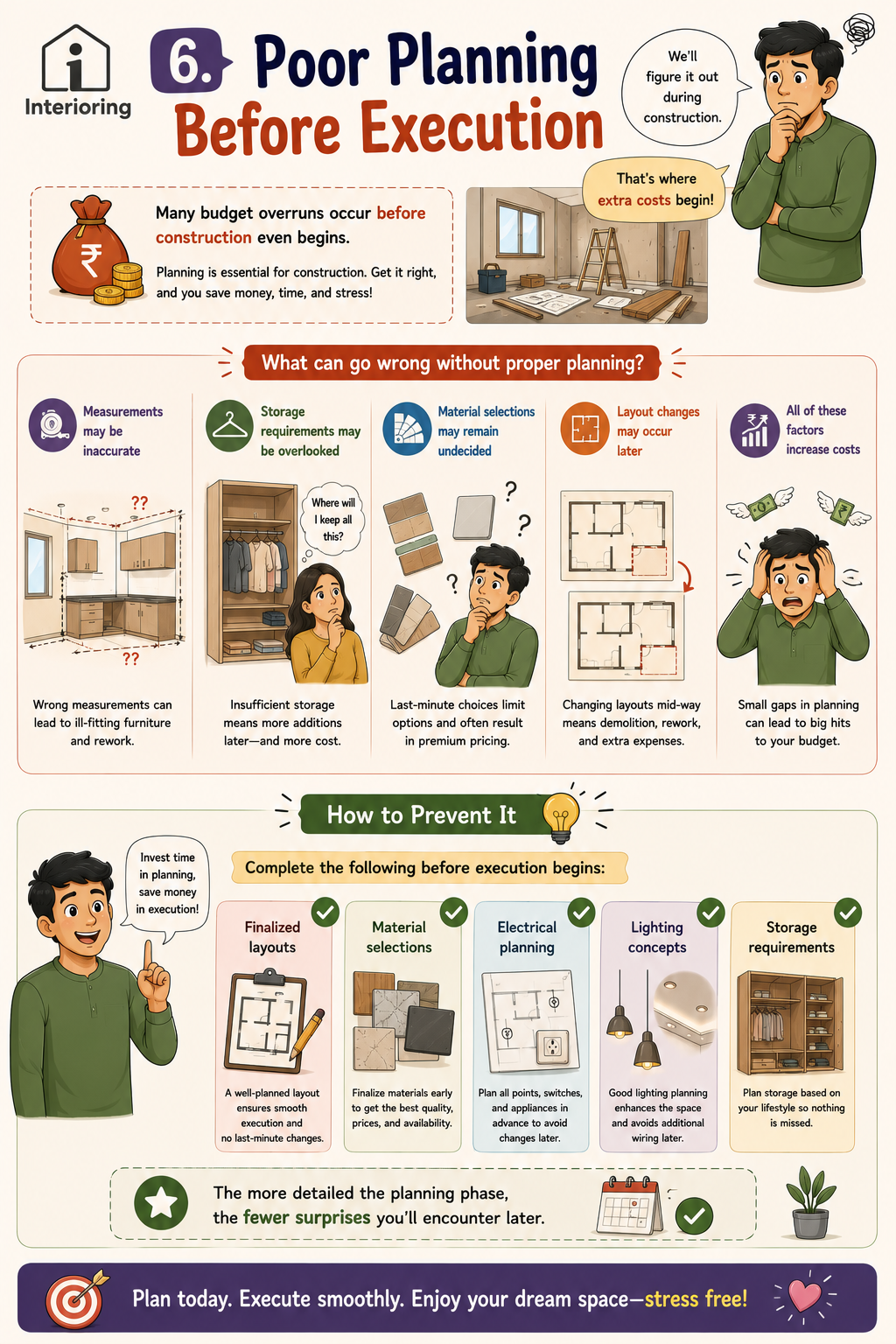
Many budget overruns occur before construction even begins, planning is essential for construction and it is very important to get planning right without proper planning: Measurements may be inaccurate, Storage requirements may be overlooked, Material selections may remain undecided, Layout changes may occur later and all of these factors contribute to increased costs.
How to Prevent It
Invest time in planning.
Complete the following before execution begins:
Finalized layouts
Material selections
Electrical planning
Lighting concepts
Storage requirements
The more detailed the planning phase, the fewer surprises you'll encounter later.
How to Keep Your Interior Project Within Budget
Now that we've covered the common causes for budget overruns, lets take a more in depth look at its prevention.
Set a Realistic Budget: Research current market costs and discuss expectations openly with your designer.
Create a Detailed Scope of Work: Document every item included in the project, this prevents misunderstandings and scope creep
Allocate a Contingency Fund: Experts often recommend setting aside 10–15% of your budget for unexpected expenses, this provides flexibility without disrupting your finances.
Finalize Designs Early: Avoid making major changes once production begins, late changes almost always increase costs.
Prioritize Essentials First: Focus on The Kitchen, Storage, Functional furniture remember decorative upgrades can often be added later.
Work With Experienced Professionals: An experienced designer or interior company can help identify risks before they become expensive problems.
.Interior projects go over budget for many reasons, but the majority of them stem from poor planning, changing requirements, and unrealistic expectations.
Scope creep, material upgrades, hidden expenses, and late-stage modifications can quickly transform a well-planned budget into an expensive surprise.
The key to staying on budget isn't avoiding upgrades altogether it's making informed decisions before execution begins.
With proper planning, transparent communication, realistic expectations, and professional guidance, homeowners can create beautiful, functional interiors without constantly worrying about rising costs.
Remember, a successful interior project isn't necessarily the one that spends the most money. It's the one that delivers the best value while staying aligned with your goals, lifestyle, and budget.
Looking for Interior Design Help?
Connect with top-rated interior professionals in your city. Browse portfolios, compare styles, and get free quotes.